The Weather Tamer
Ten coats, five to twelve years, and one number that decides
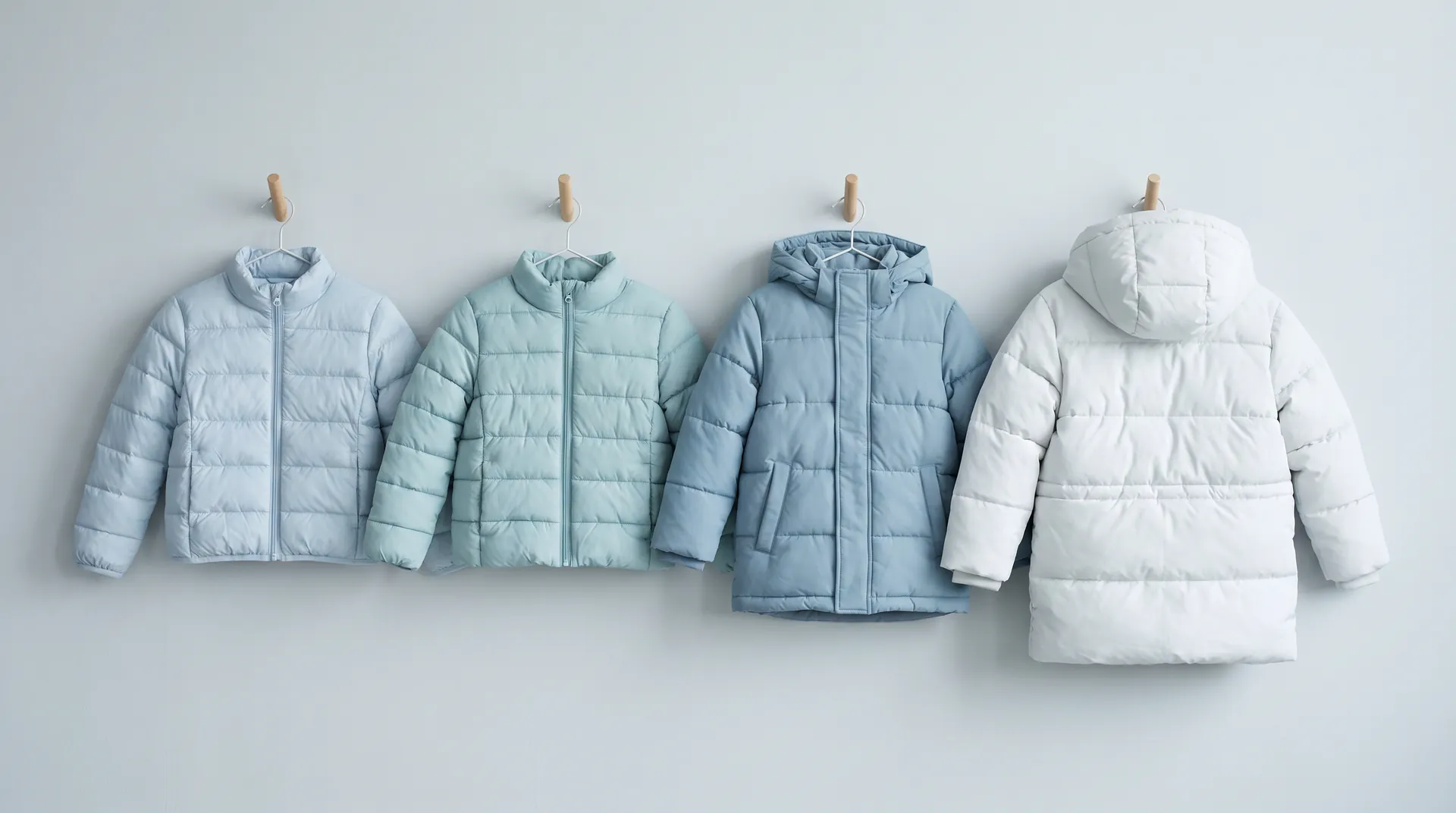
Eight of these ten put their own weight in the title — ultra lightweight, lightweight, heavyweight, snowsuit — and that word is the entire structure of this page. Coldest at the top, hottest at the bottom, and the page itself warms up as you go.
The two that never say are at the end, off the scale, where they belong. Nothing here is our rating. It is theirs.
Duck down at 650 fill behind a windproof shell — the most warmth per gram on this page, and the least warmth overall. This is the coat that lives crushed in a school bag from October, not the one for a bus stop in February.
Two of these turn inside out and are a second coat when reversed, which is worth more at this weight than at any other — a lightweight gets worn every day of a mild winter, so it gets dirty twice as fast.
The daily winter coat. Both say water-resistant, and neither says waterproof — that distinction holds up in snow and gives out in a day of rain.
The only thing here built for sitting down in snow rather than walking past it. A bib covers the gap a coat leaves at the waist, which is where a day of sledging actually ends.
2 of 10
These two never state a weight, so they cannot be placed on the scale without guessing. Judge them by the lining instead: a faux-fur hood and a beanie on one, an active cut on the other.
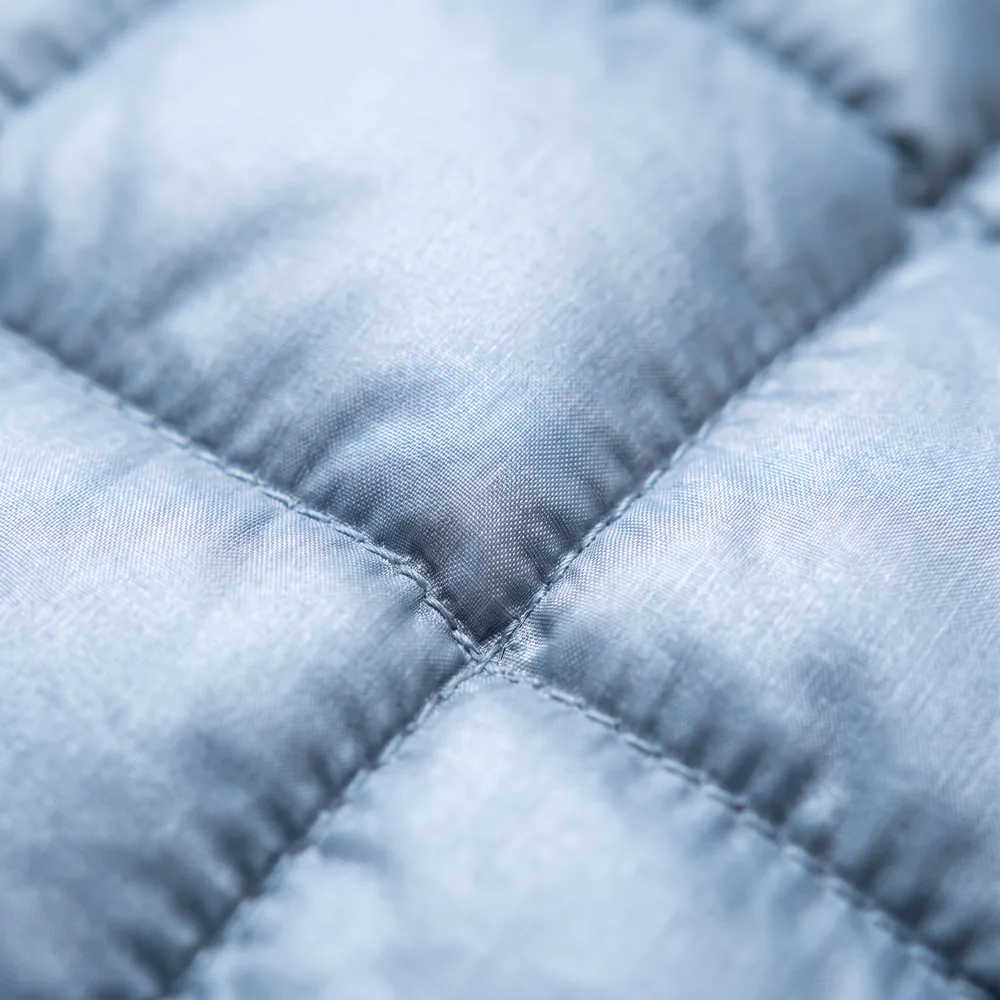
The stitch spacing is the tell. Wider baffles hold more air and more loft, which is the whole of what a weight rating describes.
3 of the rungs
Three weights are stocked as a matched boys' and girls' pair — same shell, same insulation, different cut and colourway. Useful if you are buying for two children at once and would rather they argued about something else.